
Thailand's EVs Grew About 17-Fold in Four Years: China, ASEAN and Japan, Seen from the Streets and the Press
Today, November 13, Chinese Premier Li Qiang arrives in Thailand. During his official visit, which runs through November 15, the two countries are expected to sign a memorandum of understanding on cooperation in the automotive industry. On the day Thailand welcomes China's premier, this feature looks at how far Chinese electric vehicles have spread on Thai streets, through photos, numbers and the way different countries' media report it.
1. BYD on the streets
BYD cars are now an ordinary sight on Bangkok's streets. I also often see other Chinese EVs, such as GAC AION and GWM. A former member of my staff, around 30, had already bought a BYD two years ago. In a friend's condominium, BYD ads run on the elevator screen as a matter of course.
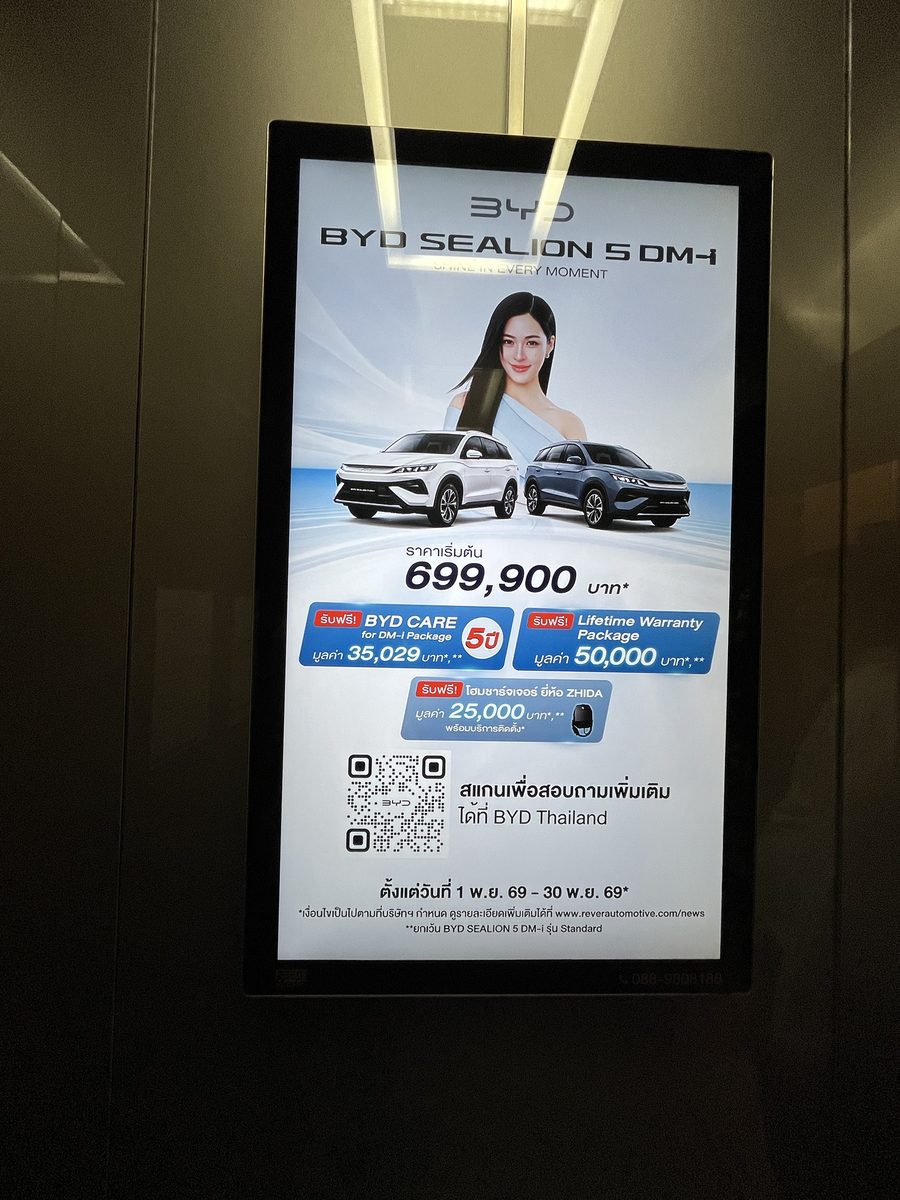
BYD opened a plant in Rayong province, eastern Thailand, in July 2024, with capacity of 150,000 vehicles a year.
2. The gap I saw at the 2022 Motor Expo
In December 2022, a senior official at Thailand's Ministry of Industry strongly urged me to see the Motor Expo with my own eyes. Chinese and European makers were showing almost nothing but EVs, he said; Japanese companies were showing hardly any, and drew no crowds. If I worked with Japanese companies, I should feel that gap firsthand. I took it as a message of urgency.
When I went, the booths of Chinese makers such as BYD were packed. The Japanese booths had visitors too, but each maker showed about one EV, and there were fewer people than at the Chinese booths. That was my impression. At that show, nearly half of the pure EV models were Chinese brands (Xinhua). BYD displayed seven models there, including the ATTO 3, HAN EV and TANG EV (BYD).
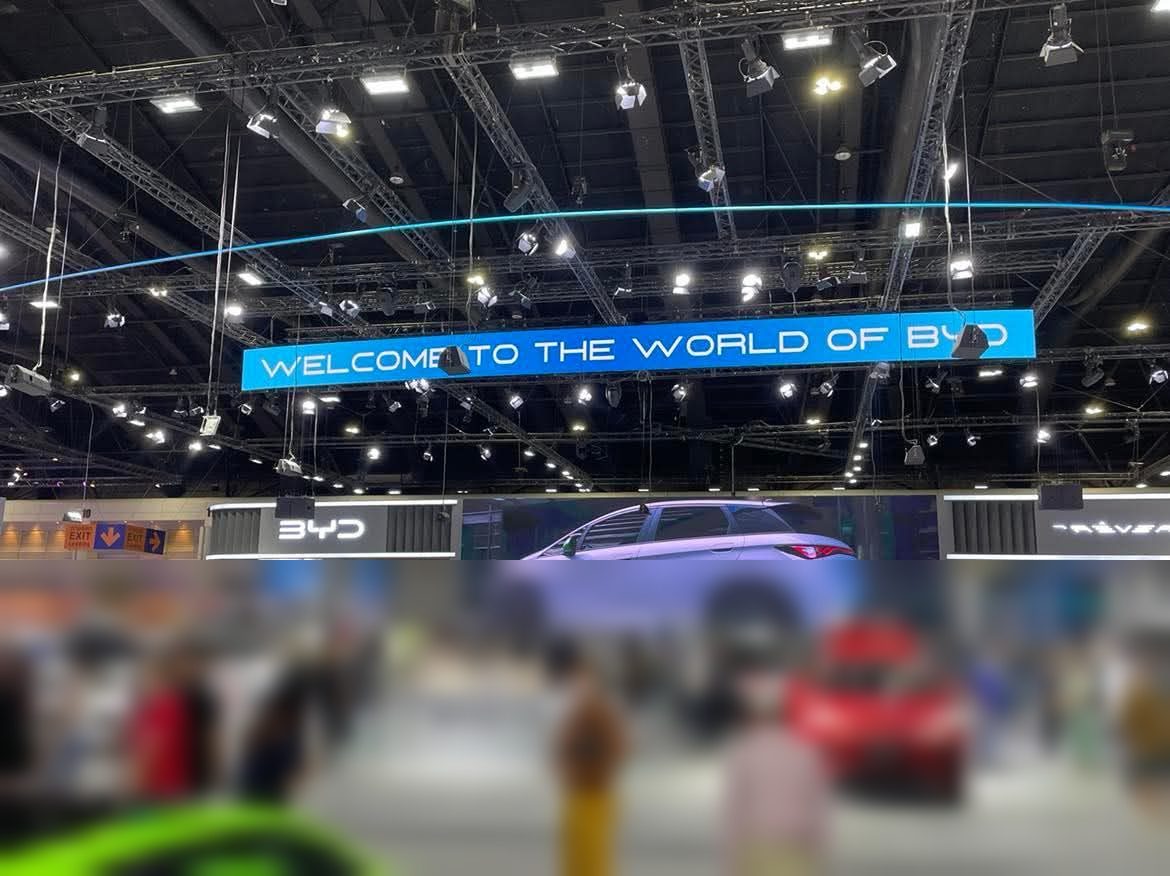
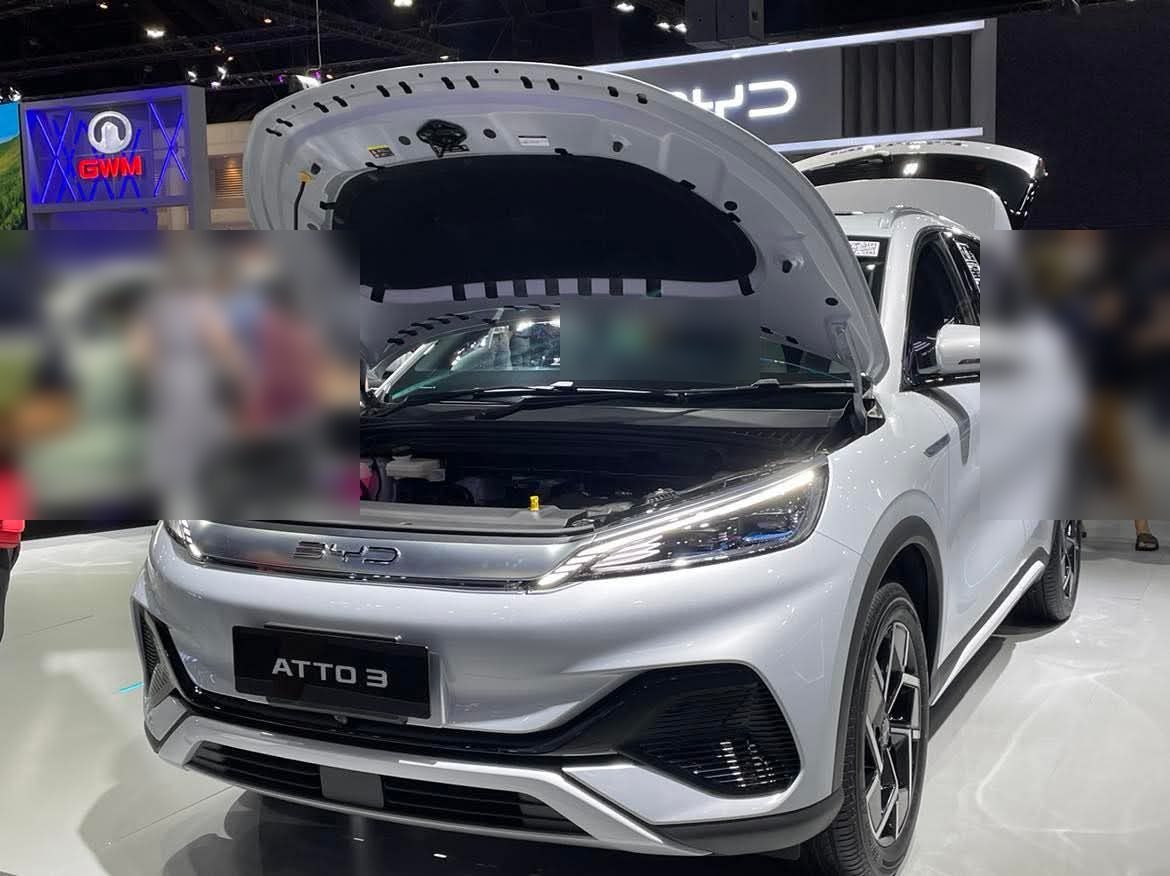
During the same show, on December 7, 2022, Tesla opened orders in Thailand and passed 5,000 within three days (The Nation).
3. Riding in a Tesla
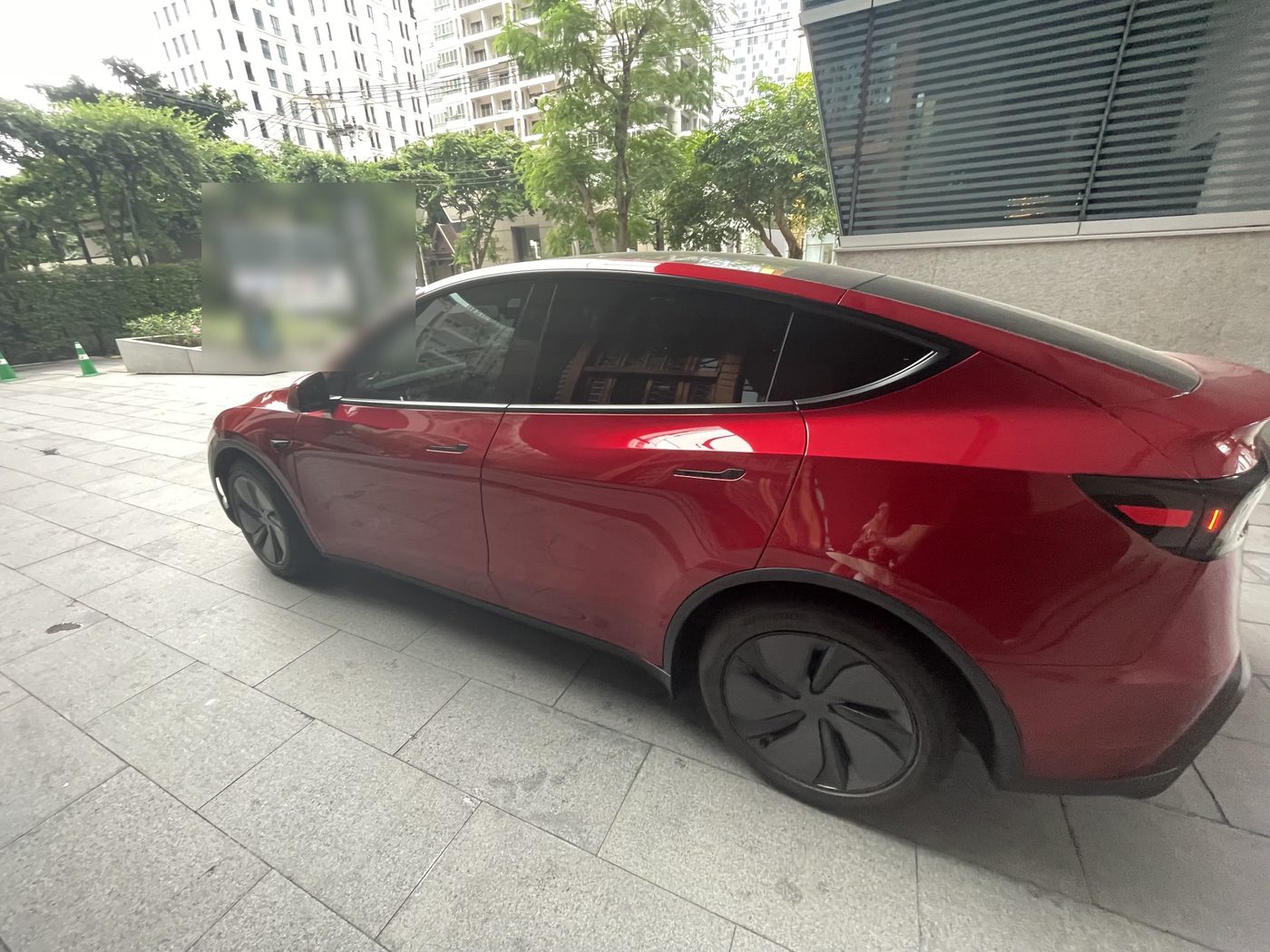
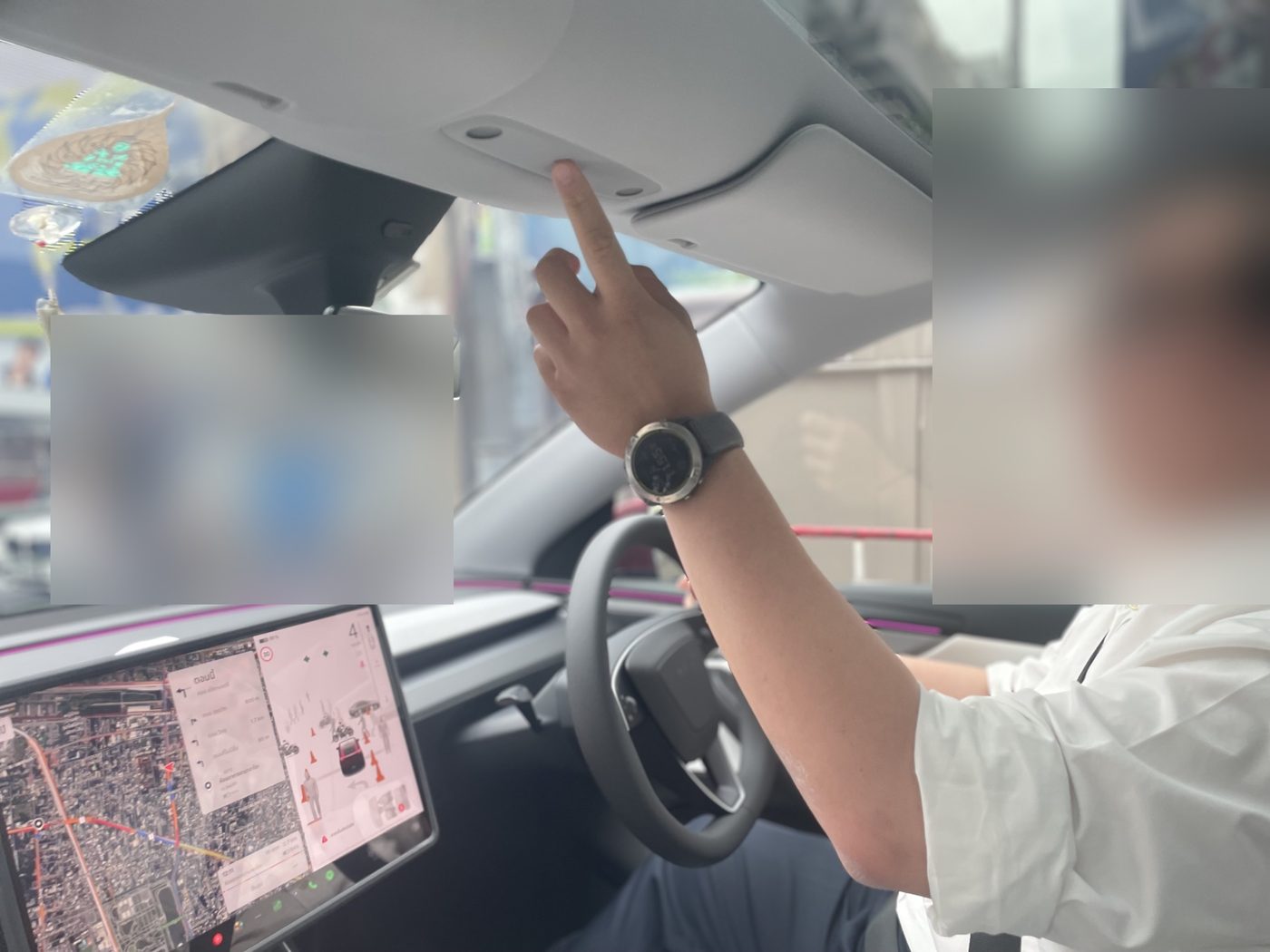
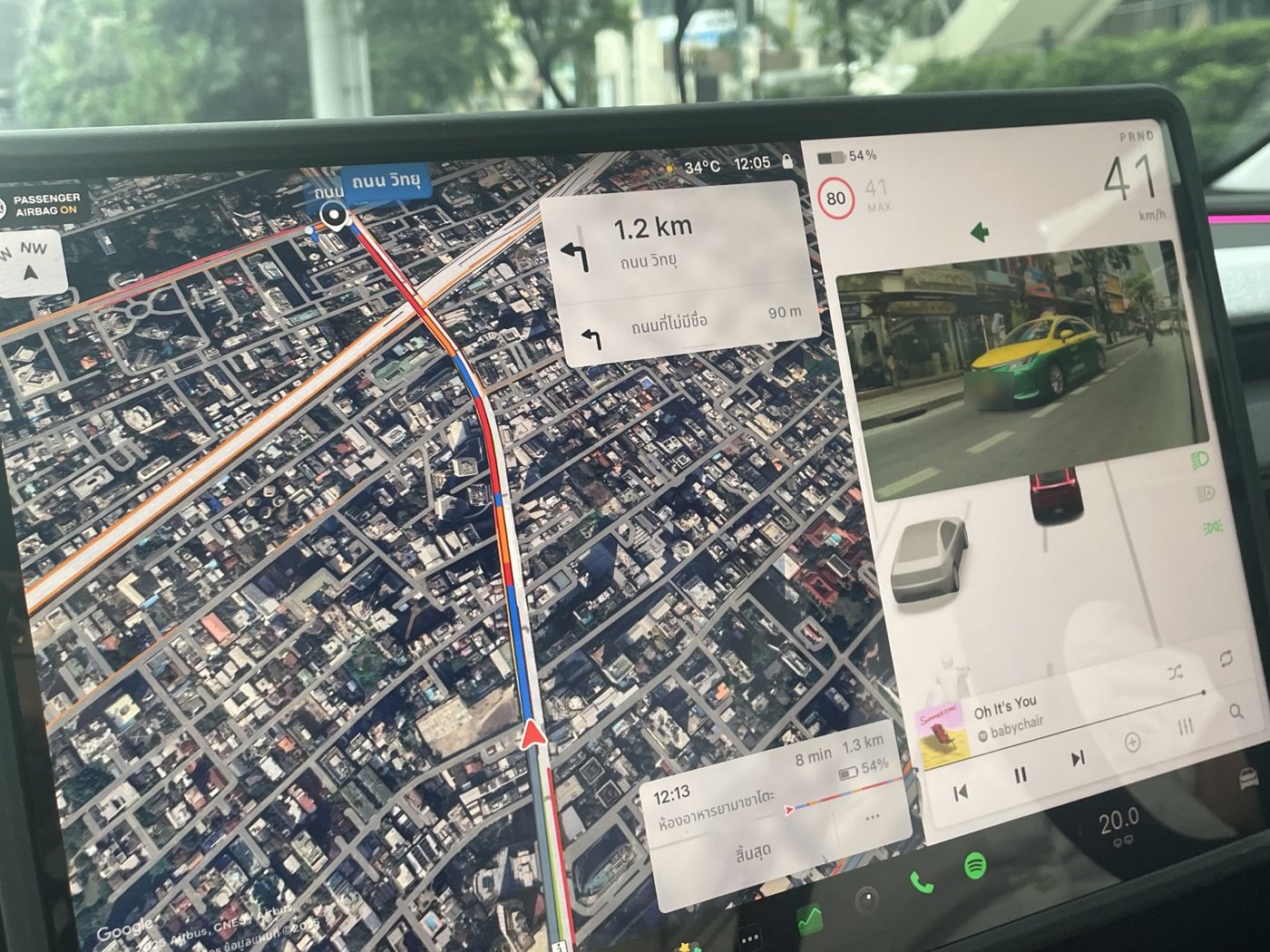
Riding in an acquaintance's Tesla Model Y, I felt it was less a car than a large smartphone. The screen shows nearby cars and motorbikes in 3D and signals with color when they come close. On Thai roads full of motorbikes, that was easy to read (my own impression). Among people around me, young car enthusiasts around 30 switched early to Tesla and BYD (same).
4. The numbers: about 17-fold in four years, 90% Chinese
Facts
- New BEV registrations in Thailand rose from 9,729 in 2022 to 167,789 in January–September 2026 alone (up 93.5% year on year).
- In January–September 2026, Chinese brands accounted for 90.4% of new passenger BEVs. But the ranking among them changed: Chery (OMODA/JAECOO) was first with 19.5%, and BYD (including DENZA) second with 16.5%. In January–September 2025, BYD had been first with 33.9% (JETRO, based on Thailand's Department of Land Transport data). Chery opened a plant in Thailand in April 2026 (CGTN).
New BEV registrations in Thailand
| Rank | Jan–Sep 2025 | Jan–Sep 2026 |
|---|---|---|
| 1 | BYD (incl. DENZA) 33.9% | Chery (OMODA/JAECOO) 19.5% |
| 2 | MG (SAIC-CP) 14.8% | BYD (incl. DENZA) 16.5% |
| 3 | GAC AION 10.9% | MG (SAIC-CP) 14.2% |
| 4 | Changan (DEEPAL/AVATR) 10.0% | Geely (ZEEKR) 12.1% |
| Chinese brands, total | 89.8% | 90.4% |
Share of new passenger BEV registrations. Source: JETRO (Oct 15, 2025; Oct 27, 2026)
What the numbers suggest (interpretation)
- Applying the shares to the totals, BYD's volume was roughly flat: about 29,400 units in January–September 2025 and about 27,700 a year later (my calculation). The market doubled, so its share halved. BYD did not fall so much as other Chinese brands surged. Chinese brands cannot be treated as one block; competition among them is fierce.
5. Compared with Japan and ASEAN
On the same yardstick (2025)
| Japan | Thailand | |
|---|---|---|
| New passenger cars | 3,836,372 | 527,085 |
| of which BEVs | 60,677 | 121,901 |
| BEV share of new cars | 1.58% | 23.1% |
| BYD sales | 3,870 | 41,209 |
| BYD share of new cars | about 0.1% (my calculation) | 7.8% |
Japan includes kei cars (EVsmart, compiled from JADA, Zenkeijikyo and JAIA data). BYD Japan: JAIA via Nikkan Kogyo Shimbun. Thailand: JETRO (DLT data, May 11, 2026). Thailand's BYD figure covers all powertrains.
Facts
- Thailand's new-car market is about one-seventh the size of Japan's, yet it registered about twice as many BEVs (my calculation from the table).
- In Japan, EVs were 1.71% of new cars in 2022 and 1.58% in 2025, essentially flat (EVsmart), rising to 2.58% in January–March 2026 (same). In Thailand the share went from 1.1% in 2022 to 23.1% in 2025 (JETRO).
- Among imported cars in Japan, EVs reached 19.0% in April–September 2026, a record for a half-year, led by Tesla (JAIA, via Newswitch, Oct 11, 2026).
- BYD sold 3,870 cars in Japan in 2025, a record (Newswitch, Jan 9, 2026). In April–September 2026, it sold 2,043 regular passenger cars, down 13.3% year on year, plus 648 kei EVs (Newswitch, Oct 11, 2026).
- On July 28, 2026, BYD launched the RACCO, a kei EV designed for Japan, priced from ¥2,145,000; all grades qualify for the national EV subsidy (¥150,000) (Car Watch, Jul 28, 2026).
BEV share of new cars
Within ASEAN (2025)
| Country | New vehicles (total) | BEVs | BEV share of new vehicles |
|---|---|---|---|
| Thailand | 621,166 | 121,901 | about 20% |
| Indonesia | 803,679 | 103,930 | 12.9% |
| Malaysia | 820,752 | about 30,848 | about 3.8% |
| Japan | 4,565,777 | 60,677 | about 1.3% |
New vehicles include commercial vehicles. BEV counts for Thailand and Japan are passenger cars; their shares, and Malaysia's, are my calculations. Countries count slightly differently, so treat these as indicative. Sources: JETRO, "Automobile production and sales in major countries and regions" (July 2026); OICA; EVsmart for Japan's BEVs.
- Elsewhere, EVs were about 45% of new cars in Singapore (Land Transport Authority, as reported by the Vietnam News Agency), where BYD was the best-selling brand for the second year running (Motorist). In Vietnam, the domestic brand VinFast delivered 175,099 cars at home in 2025, 29% of the car market (TheLEADER). ASEAN's EV growth is not driven by Chinese brands alone.
- By EV share of new cars, Japan ranks below every ASEAN country compared here.
My view (interpretation)
- While Japan has built around hybrids, EV adoption has begun across ASEAN. And Chinese brands are not the only ones driving it: in Vietnam, the domestic VinFast leads.
- In Thailand, BYD expanded by selling its existing models; in Japan, it is trying to get in with a kei EV built for the Japanese market's best-selling category.
- In Japan, EVs of any origin remain around 2% of new cars, so this is not only about Chinese EVs. There is probably no single reason. I sense that the strength of Japanese makers in hybrids, and how Chinese products are viewed in Japan, both play a part. It is hard to see from Japan, but in Thailand the landscape changed in four years. When Japanese companies think about ASEAN markets, it is worth starting from this gap.
6. How each country's media sees the spread of EVs
The same spread of EVs looks different depending on whose media is reporting it.
| Country / outlet | Headline or words (translated from the original) | Focus |
|---|---|---|
| Thailand: Post Today (Apr 7, 2026) | "This year the Thai auto industry came back to peak vibrancy." "EVs from Chinese brands were the most popular, with BYD first in bookings at the show." | The boom. Bangkok International Motor Show 2026 bookings hit a record 132,951 (up 71.8%) |
| Thailand: ThaiPublica (Jun 10, 2026) | Headline: "ttb analytics says the energy crisis will push new EV registrations in 2026 past 150,000" | Why the boom. Higher fuel prices from the Middle East conflict favor EVs, which are cheaper to run; EVs forecast at 25.1% of new cars |
| Thailand: Brand Inside (Mar 4, 2026) | Headline: "Thailand's EV market enters an era of 'true prices revealed' as Chinese makers end the price war and the government cuts subsidies." A customer's voice: "BYD's heavy price cuts caused the trade-in value of their cars to fall sharply." | Consumers. BYD raised prices for the first time since entering Thailand; the Dolphin is now 599,900 baht |
| Thailand: CarOnline (Jul 7, 2026) | "Chinese EVs aren't wrong for being cheap, but a low price instantly becomes an expensive one if no one can repair the car when it breaks down." | Consumers. Neta's parent entered bankruptcy proceedings in June 2025, affecting about 25,000 Thai owners. Resale value of Chinese EVs and PHEVs fell from about 61% of the new price (early 2024) to 47% (April 2026), citing evcarsthailand.com |
| China: Xinhua (Apr 4, 2026) | "Thailand is an important stop for Chinese new-energy vehicles going overseas, and an important base for Chinese automakers to expand in Southeast Asia and right-hand-drive markets." | China's expansion. Portrays Chinese EVs as helping Thailand's green transition amid high fuel prices caused by the Middle East conflict |
| China: Caixin (Mar 26, 2026) | "Electric vehicle (EV) registrations in Thailand nosedived 80% to 6,168 cars in February from the previous month." Headline: the Thai sales drop "casts shadow on Chinese automaker ambitions" | China's expansion. Reports the demand slump after subsidies were cut |
| Japan: Kyodo News (Nov 3, 2026) | "Cheap products from Chinese makers flowed in." "As Chinese brands gained share, Japanese makers had also lost share of sales." | Japanese makers' market share |
| Vietnam: TheLEADER (Jan 22, 2026) | Headline: "VinFast's revolution: from the prejudice of 'can't even make a screw' to the throne of Vietnam's auto market" | Pride in a national brand |
| Indonesia: detikOto (Oct 6, 2025) | Headline: "Indonesia's EV population 'explodes', BYD becomes king" | Market growth. BYD and DENZA took about half of EV sales (Jan–Aug 2025) |
Comparing them (interpretation)
- Thai media show two faces. Motor show bookings hit a record, and high fuel prices are a tailwind for EVs. At the same time, they report buyers' worries: price hikes, repairs, and falling resale values. One reading: the boom is real, but buyers are becoming more discerning. China's state news agency Xinhua frames Thailand as a "base" for going overseas, in a positive story of green transition amid high fuel prices. Within China, the business magazine Caixin reported the drop in demand.
- Japanese media tend to see it through Japanese makers' market share. Vietnam reports it as pride in a national brand; Indonesia, as market growth.
- The more people choose EVs, the more repairs and resale values will matter. The sales and service networks that Japanese brands have built over decades could become a strength here (interpretation).
7. What Japanese makers are doing in Thailand
Facts
- Honda began producing the e:N1 compact electric SUV at its plant in Prachinburi province in December 2023, the first passenger EV built in Thailand by a Japanese automaker (Paul Tan, Dec 15, 2023).
- Investment pledges: In December 2023, Toyota, Honda, Isuzu and Mitsubishi Motors announced a combined 150 billion baht for EV production in Thailand over five years (just-auto).
- Isuzu began mass production of the D-MAX EV electric pickup in Thailand in April 2025, starting with left-hand-drive units for Europe (MarkLines, Apr 30, 2025).
- Toyota unveiled the new Hilux in Bangkok on November 10, 2025, including the electric Hilux TRAVO-e (Toyota). It is produced locally under Thailand's EV 3.5 scheme, priced at 1,491,000 baht, with deliveries from December 2025 (car250, Apr 3, 2026).
- Split by powertrain: Chinese brands took 90.4% of new passenger BEV registrations in January–September 2026, while Japanese brands took 97.3% of new passenger hybrid (HEV) registrations in September 2026 (JETRO, Oct 27, 2026).
8. What this means
For companies and investors following Japanese automakers and suppliers, and companies doing business in Thailand. Not investment advice.
- Thailand is now two markets: EVs for Chinese brands, hybrids for Japanese ones. About 90% of passenger EVs (Jan–Sep 2026) are Chinese; over 90% of hybrids (Sep 2026) are Japanese. Viewed through Japan's own numbers (EVs around 2% of new cars), the change on the EV side is easy to miss. Look separately at whether a product or business is exposed to the EV side or the hybrid side.
- Don't treat Chinese brands as one block. In 2026 Chery overtook BYD, whose volume was flat. Winners and laggards among Chinese brands change quickly. For anyone trading with, sourcing from, or competing with them, brand-by-brand monthly data is worth tracking.
- The EV contest has reached the pickup, Japan's home ground. Isuzu and Toyota have started building electric pickups in Thailand. Pickups are a segment where Japanese makers are strong, and vehicles with a high share of Thai-made parts fit the direction Thailand's tax policy favors. For parts and materials suppliers, a place in the supply chains of Japanese electric pickups may be the next opportunity.
Yoshiko Tsuji is President & Representative Director of CrossRoad Capital Co., Ltd. Since founding the company in 2011, she has supported Japanese companies' expansion into ASEAN from Thailand.
This article was first published in Japanese on crossroad-capital.jp (Japanese version). The tax and policy background is covered in our weekly Thailand newsletter: November 4 issue (the 35% excise tax on imported EVs) and November 11 issue (who is most affected by the 35% tax), both in Japanese.
Sources
- JETRO (Jul 2026): Automobile production and sales in major countries and regions (in Japanese)
- VietNamNet (May 2, 2026): EV share of new cars in Singapore
- Motorist (Jan 2026): BYD best-seller in Singapore for the second year
- TheLEADER (Jan 22, 2026): VinFast's revolution (in Vietnamese)
- Post Today (Apr 7, 2026): Motor Show 2026 bookings hit a record (in Thai)
- ThaiPublica (Jun 10, 2026): ttb analytics on the energy crisis and EVs (in Thai)
- Brand Inside (Mar 4, 2026): Thailand's EV market and "true prices" (in Thai)
- CarOnline (Jul 7, 2026): Owners of Chinese EVs, two years on (in Thai)
- Xinhua (Apr 4, 2026): Chinese EVs and Thailand's green transition amid the fuel crisis (in Chinese)
- Caixin Global (Mar 26, 2026): Thai EV sales drop casts shadow on Chinese automaker ambitions
- Kyodo News (Nov 3, 2026): Thailand to raise tax on imported EVs (in Japanese)
- detikOto (Oct 6, 2025): Indonesia's EV population "explodes" (in Indonesian)
- Newswitch (Jan 9, 2026): Imported EVs and BYD in 2025 (in Japanese)
- Newswitch (Oct 11, 2026): Imported car registrations, first half of FY2026 (in Japanese)
- Car Watch (Jul 28, 2026): BYD launches the RACCO kei EV (in Japanese)
- Paul Tan (Dec 15, 2023): Honda e:N1 production starts in Thailand
- just-auto: Japanese automakers step up BEV investments in Thailand
- MarkLines (Apr 30, 2025): Isuzu D-MAX EV production in Thailand
- Toyota (Nov 10, 2025): World premiere of the new Hilux
- car250 (Apr 3, 2026): Hilux TRAVO-e price and local production (in Thai)
- Headlightmag (Jul 12, 2026): BYD Sealion 5 DM-i prices (in Thai)
- Malay Mail (Jul 4, 2024): BYD opens its Thailand plant
- Xinhua (Dec 2, 2022): Chinese-made EVs at the Thailand Motor Expo
- BYD (Nov 30, 2022): Seven models at the Thailand International Motor Expo
- The Nation (Dec 10, 2022): Tesla passes 5,000 orders in three days
- JETRO (Oct 3, 2024): Thailand's BEV market (in Japanese)
- JETRO (May 11, 2026): Changes in Thailand, a Japanese stronghold (in Japanese)
- JETRO (Oct 15, 2025): Passenger BEV registrations, Jan–Sep 2025 (in Japanese)
- JETRO (Oct 27, 2026): Passenger BEV registrations, Jan–Sep 2026 (in Japanese)
- Autolife Thailand (Jan 2025): 2024 EV registrations (in Thai)
- CGTN (Apr 21, 2026): Chery opens an NEV plant in Thailand
- EVsmart (May 2026): EV share of new car sales in Japan (in Japanese)
- The Nation (Nov 3, 2026): Imported EV tax and carmakers' reactions